The Ultimate Guide to Manuka Honey: How to Choose the Best Grade for Your Health
Curious about manuka honey? Learn how UMF and MGO ratings work, what medical-grade honey really means, and how to pick the perfect jar for your wellness goals!
Summary:
Whether you are visiting New Zealand or browsing your local health store, manuka honey always stands out as a superfood superstar. Loved worldwide for its unique antibacterial compound called MGO (Methylglyoxal), this liquid gold comes with a wide range of prices and confusing labels. Why does one jar cost $20 while another costs over $200? It comes down to active compound concentration, harvest rarity, and official government certifications. In this post, we break down UMF vs. MGO ratings, explain medical-grade honey, and help you find the best jar for your everyday health and wellness routines!
What Makes Manuka Honey So Special?
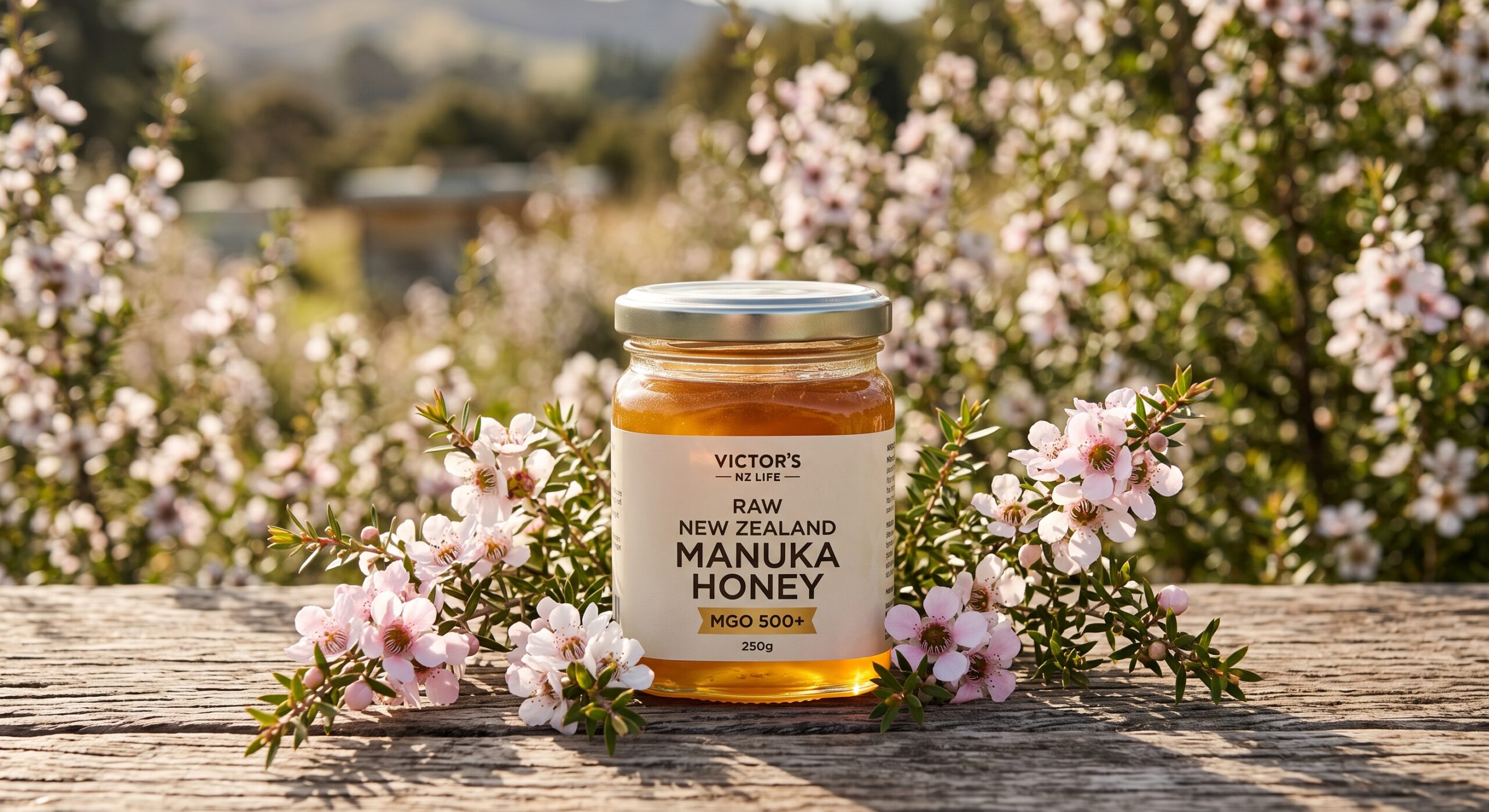
Regular honey has natural antibacterial properties derived from hydrogen peroxide, but heat and body enzymes easily break it down. Manuka honey, harvested from the wild native Manuka bush (Leptospermum scoparium) in New Zealand, possesses a rare power known as Non-Peroxide Activity (NPA).
The secret hero here is MGO (Methylglyoxal), a potent natural compound formed as nectar matures in the hive. Unlike regular honey, MGO remains stable even when exposed to heat, stomach acid, or digestive enzymes, ensuring its health benefits reach where your body needs them most.
As we age, our digestive lining can become sensitive, and our immune systems need extra care during seasonal shifts. Manuka honey acts as a gentle, natural soothing agent for digestion, sore throats, and oral hygiene by keeping harmful bacteria in check.
Decoding the Label: UMF, MGO, and Flower Types Made Simple
When shopping for manuka honey, understanding these three key label terms ensures you get genuine quality every time:
- MGO (Methylglyoxal Content): Measures the exact amount of MGO in milligrams per kilogram of honey. For example, MGO 263+ contains at least 263 mg of active MGO per kg, offering a quick way to gauge strength.
- UMF (Unique Manuka Factor): The gold-standard quality mark issued by the UMF Honey Association. It evaluates four key compounds including MGO, Leptosperin (authenticity indicator), DHA (longevity indicator), and HMF (freshness indicator).
- Monofloral vs. Multifloral: Monofloral means the honey is gathered predominantly from Manuka blossoms, resulting in higher potency and richer flavor. Multifloral is a blend with other wild flowers, offering a milder taste and lower potency.
| UMF Grade | Min. MGO Equivalent | Best Uses & Benefits |
| UMF 5+ | MGO 83+ | Daily tabletop sweetener (tea, toast, smoothies) |
| UMF 10+ | MGO 263+ | Therapeutic entry level (daily immunity & throat soothe) |
| UMF 15+ | MGO 514+ | High activity grade (targeted digestive & stomach support) |
| UMF 20+ & above | MGO 829+ | Premium medical grade (maximum strength antibacterial support) |
Why Is High-Grade Manuka Honey So Expensive?
The price gap between standard store-bought honey and top-tier manuka honey reflects extreme harvest conditions and natural scarcity.
The Manuka tree blooms for just 2 to 6 weeks a year during the New Zealand summer. Harvesting pure nectar requires ideal weather, and obtaining medical-grade batches (UMF 20+) often requires airlifting hives via helicopter into remote, untouched native forests. Less than a small fraction of annual honey harvests reaches this elite purity level.
True clinical-grade medical honey undergoes specialized gamma sterilization to eradicate wild spores, allowing it to be safely used in wound gels and burn dressings. While budget options work great as daily natural sweeteners, high-potency batches are prized for their intensive health-supporting properties.
How to Choose and Enjoy Your Manuka Honey
Follow these three simple rules when choosing and consuming your honey:
1. Check for Official Certifications: Look for verified UMF numbers or clear MGO ratings. Avoid vague marketing buzzwords like “Bio-Active” or “100% Pure” without test numbers.
2. Match the Grade to Your Needs:
- For everyday enjoyment: Go for UMF 5+ / MGO 83+.
- For wellness & gut balance: Pick UMF 10+ to UMF 15+ (MGO 263+ to 514+) for the best price-to-benefit balance.
- For targeted care or luxury gifting: Choose UMF 20+ medical-grade lines.
3. Protect the Active Enzymes: Avoid adding manuka honey to boiling water (keep hot drinks under 40°C/104°F to preserve enzymes). The best way to consume it is straight off a wooden, ceramic, or silicone spoon on an empty stomach in the morning!
Final Thoughts
New Zealand’s manuka honey is far more than a sweet treat—it is a scientifically backed gift of nature. By focusing on verified UMF and MGO numbers, you can easily choose the ideal jar to support your personal wellness journey!
Frequently Asked Questions (FAQ)
Q1. Can people managing blood sugar levels consume manuka honey?
A1. Like all natural honeys, manuka honey contains natural fructose and glucose which affect blood sugar. While it is more nutrient-dense than refined sugar, individuals managing blood sugar should keep intake minimal (under 1 teaspoon daily) and consult their healthcare provider.
Q2. Will metal spoons destroy manuka honey’s active compounds?
A2. Briefly scooping honey with a stainless steel spoon will not harm it. However, because honey is naturally acidic, using wooden, ceramic, or silicone spoons prevents long-term oxidation and preserves its natural taste.
Q3. Is manuka honey safe for infants?
A3. Never give any honey, including manuka honey, to infants under 12 months old. Raw honey can contain natural spores that pose a risk of infant botulism in developing digestive systems.
Sources and References
- New Zealand Ministry for Primary Industries (MPI) – Mānuka Honey Science and Regulatory Definition
- Unique Mānuka Factor Honey Association (UMFHA) – Standards and Grading System (UMF™ Verification)
- WebMD – Health Benefits and Clinical Uses of Manuka Honey