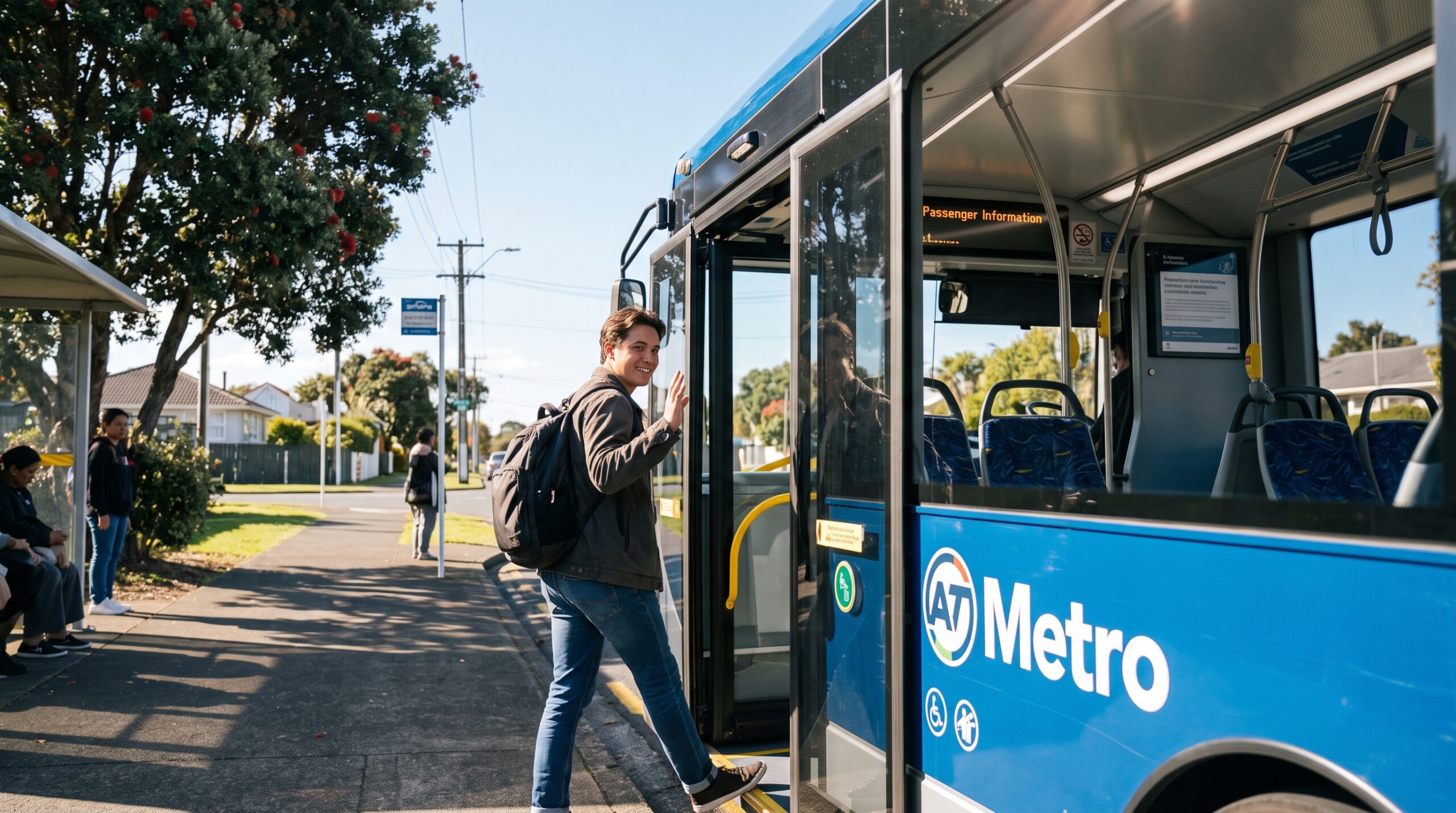
“Thank You, Driver”: Why Kiwis Shout from the Back of the Bus (and What It Means Behind the Wheel)
As an Auckland city bus driver for over a decade, here is the real story behind New Zealand’s heartwarming habit of shouting “Thank you, driver” from the back doors—and why those three words carry our entire shift.
Content
Sitting in the driver’s seat of a 12-metre Auckland city bus, navigating everything from tight suburban roundabouts to gridlocked peak-hour motorways, there is one sound that echoes through my cab dozens—sometimes hundreds—of times a day:
“Thank you, driver!”
“Cheers, mate!”
It comes not just from the passengers stepping out right next to me at the front door. It rings out loud and clear from the rear doors, ten metres back through a crowded aisle humming with engine revs, tyre noise, and afternoon chatter.
For international students, working holidaymakers, and new migrants stepping onto an Auckland bus for the first time, watching people bellow a warm thank-you across a packed vehicle as they jump off can feel surprising, even a little comical.
Having lived in New Zealand for over 33 years and spent the past decade driving buses across this city, I can tell you that this simple everyday gesture captures the very heart of Kiwi life.
Ⅰ. The Echo from the Back Door
During peak commuter hours, rear doors handle the bulk of our passenger flow. People tag off their AT HOP cards, step onto the curb, and yet, before turning down the footpath, almost every second person pivots back toward the windscreen.
A high school kid with an oversized backpack, a businesswoman in a smart blazer, an elderly pensioner carrying paper grocery bags—they catch my eyes in the interior rearview mirror, give a nod or a quick wave, and let out a cheerful, unprompted: “Thanks, driver!”
Driving a heavy vehicle through rain-slicked intersections with 60 or 70 passengers behind you requires total, unbroken concentration. Your shoulders get tense; your lower back aches after eight hours in traffic. But when that hearty shout cuts through the rumble of the diesel engine, that tension simply evaporates. It is an instant reminder that you are not just operating a machine; you are moving your community.
Ⅱ. Where Does This Kiwi Transit Habit Come From?
New Zealand is widely known for its egalitarian mindset—the deeply ingrained belief that every person deserves a fair go and that no job is beneath another.
- Mutual Respect Across the Board:In many bustling global metropolises, public transport can be impersonal and transactional. In Aotearoa New Zealand, service providers and passengers share an equal footing. You are not treating the driver as hired help; you are thanking an equal neighbour who safely steered you home through the rain.
- Casual, Low-Fuss Warmth:Kiwis generally dislike stiff formality, but they place high value on unpretentious everyday kindness. A brief eye contact and a casual word of gratitude make an otherwise mundane daily routine feel human and grounded.
Ⅲ. Behind the Wheel: How Three Words Carry a Shift
Operating a commuter bus is far more demanding than most people realise. You are timing schedules down to the minute, managing tight bus lanes, watching out for sudden lane-changers, and kneeling the bus suspension at stops for prams and wheelchairs.
By the time I pull back into the depot at the end of a shift, my mind often replays the faces that passed through the doors:
- The apprentice carpenter who grinned and waved after a wet winter morning run.
- The elderly woman who smiled warmly as she carefully made her way down the steps.
- The quiet migrant worker who shyly practiced their English with a polite, “Thank you very much, sir.”
We may never exchange names, and we will likely never see each other outside the route. Yet that fleeting moment of gratitude bridges any divide of age, background, or language. It gives us drivers real pride in what we do.
Ⅳ. Practical Transit Etiquette for Newcomers
If you are new to Auckland or planning to travel across New Zealand, adopting this habit is one of the easiest ways to feel right at home. Here are three simple tips from the driver’s seat:
- Pick the Phrase That Feels Natural:
- Classic & universally polite: “Thank you, driver!”
- Local Kiwi style: “Cheers, driver!” or “Thanks, mate!”
- When the bus is too loud or crowded: A warm smile, a slight nod, or raising your hand towards the interior mirror works just as well. Drivers notice it every single time.
- Tag Off Smoothly:Keep your AT HOP card or contactless debit/credit card ready in hand a stop before your destination. Ring the bell early, wait for the bus to come to a complete stop, tag off at the door reader, and share your wave on the way out.
- Start with a Friendly ‘Morning’:When boarding through the front doors, a brief “Morning” or “Hello” as you tap your card sets a comfortable tone for the entire trip. Courtesy on the road is always a two-way street.
Ⅴ. A City Built on Small Courtesies
Throughout my 33 years in New Zealand—from running an automotive repair workshop to driving taxis for medical patients, and now steering Auckland city buses—what has kept my affection for this country alive has never been grand monuments.
It has always been the small, quiet decencies of daily life: a motorist letting you merge onto a jam-packed motorway with a quick wave, a stranger holding a shop door, and a bus passenger turning around in the rain to say thank you before heading home.
Next time you take the bus, whether in Auckland, Wellington, or Christchurch, take half a second to call out a thank-you before you step onto the pavement. You might just make someone’s entire working day.
Frequently Asked Questions (FAQ)
Q1. Is it rude if I do not shout “Thank you” from the back door?
Not at all. While thanking the driver is very common, no one will judge you if you are wearing headphones, carrying heavy luggage, or prefer to keep quiet. A simple hand wave or nod is more than enough.
Q2. Does the driver really hear people from the rear door?
Yes, surprisingly well! Modern buses are designed with good interior acoustics, and drivers are constantly monitoring the rear doors through wide internal mirrors while passengers disembark. Even if the bus is noisy, the gesture is seen and appreciated.
Q3. Is this custom common on trains and ferries as well?
Yes. Passengers regularly thank ferry deckhands when stepping off gangways, and it is very common to thank train staff and platform managers at station gates.