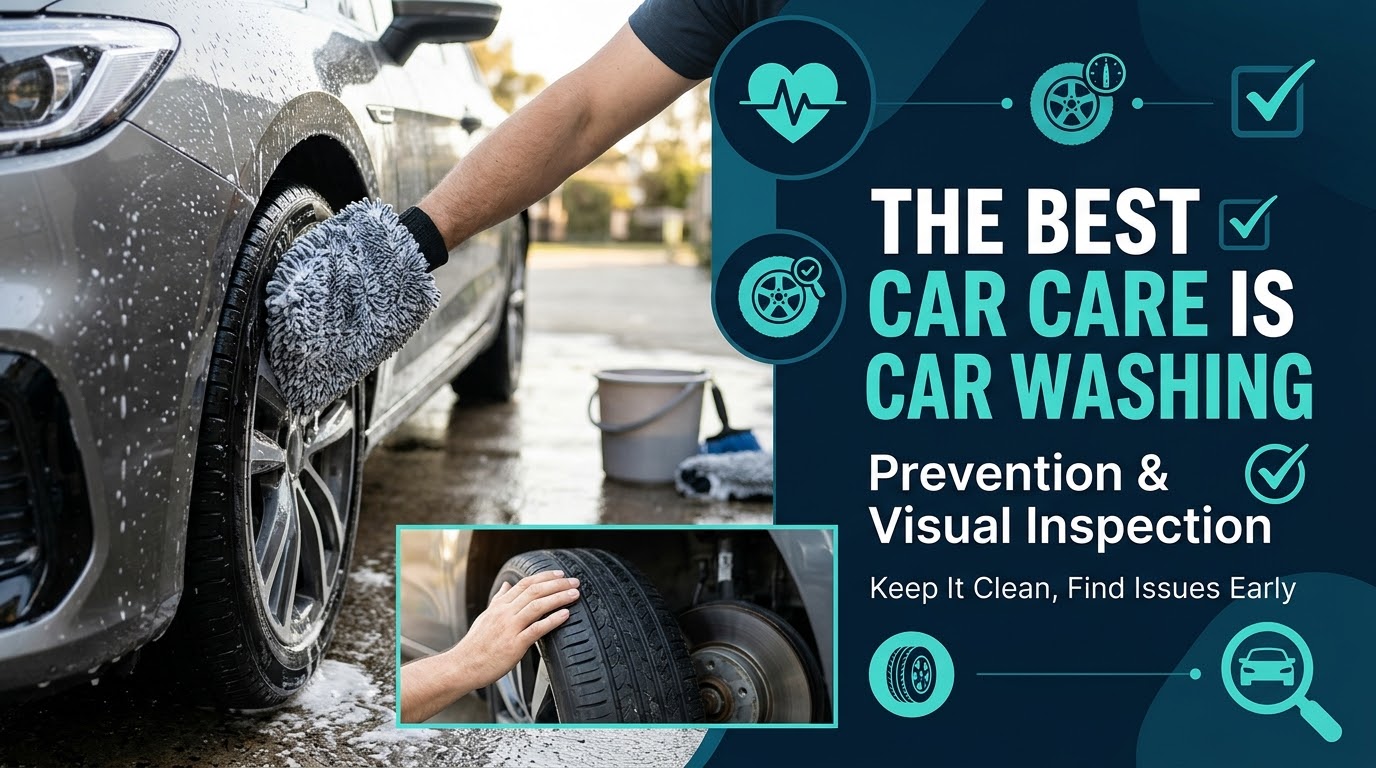
Why Wash & Inspect: The Unseen Way Dirty Cars Break Down (And How to Prevent It)
Most car breakdowns start with accumulated dirt, debris, and neglect rather than sudden mechanical failures.
Contaminants build up gradually, increasing friction, blocking airflow, trapping moisture, and causing system failures over time.
Regular car washing is critical preventative maintenance that flushes grime and allows hands-on visual inspection to catch major issues early.
1. The Science of the “Clog”: How Dirt Actually Destroys Your Car
Contaminants create friction and trap heat, leading to component failure:
- Radiator & Condenser: Debris blocks airflow, causing engine overheating and AC failure.
- Cowl Top & Drains: Clogged drains cause water overflow, damaging electrical wiring and wiper motors.
Underbody & Arches: Salt and mud trap moisture, accelerating underbody rust and deteriorating suspension bushes.
2. The Hands-On Check: Why Washing is the Ultimate Pre-Trip Inspection
Washing your car forces close inspection, enabling early detection of critical safety hazards:
① Tires: Your Only Contact with the Road
- Check tires for uneven wear (misalignment), embedded tread debris (puncture risk), and sidewall bulges (impact damage requiring immediate replacement).
② Wheels and Brakes: Looking for Warning Signs
- Inspect for excessive brake dust (sticking calipers) and deep disc grooves or sharp outer lips (rotor wear requiring service).
③ Body and Glass: Spotting Small Problems Early
- Detect stone chips early to apply touch-up paint before rust sets in.
- Spot windscreen micro-cracks while wiping glass to allow cheap repairs before full replacement is needed.
3. The 4 Critical Areas You Must Clean (And Why)
Don’t just soapy-water the roof and bonnet. Focus your efforts on these four functional areas:
| Area | What accumulates? | Why it matters | Practical Cleaning Tip |
| Cowl Top & Drains | Leaves, pine needles, organic mulch | Prevents interior leaks, mould, and wiper motor failure | Open the bonnet and clear out the debris by hand or with a brush at the base of the windscreen. |
| Radiator Grille | Insects, road grime, pollen | Prevents engine overheating and AC failure | Gently spray the hose through the front grille. Don’t use high pressure too close, or you’ll bend the delicate fins. |
| Underbody & Wheel Arches | Salt, mud, gravel dust, road grime | Prevents underbody rust and suspension bush wear | Angle your hose or high-pressure washer deep into the arches to flush out caked-on mud and salt. |
| Door & Trunk Seals | Dust, grit, mould | Keeps your cabin dry and reduces road noise | Wipe down the rubber seals with a damp cloth and apply a rubber protector to stop them from rotting. |
4. The 20-Minute Wash & Inspect Routine
- Let it Cool Down (1-2 mins): Open the bonnet to let the engine and brakes cool. Spraying cold water on hot brake discs can warp them. Use this time to clear leaves from the cowl.
- Blast the Underbody first (3-5 mins): Use a hose to flush out the wheel arches, mudguards, and lower sills. Get rid of the abrasive grit before you start touching the car.
- The Suds and Check (7-8 mins): As you wash with a mitt, use your hands to feel for paint chips, glass damage, and tire abnormalities. Be inquisitive.
- The Dry and Detail (5 mins): As you dry the car, open the doors and boot. Wipe the sill areas where water is meant to drain, ensuring no blockages are forming.
What the Experts Say (Recommended Guidelines)
In New Zealand, the importance of this hands-on approach is heavily backed by safety and automotive authorities:
The NZTA (Waka Kotahi) “TWIRL” Check
- The NZ Transport Agency strongly advocates for the “TWIRL” (Tires, Windscreens, Indicators, Rust, Lights) safety walk-around. Doing a DIY car wash naturally covers almost every single one of these check-points, helping you spot WoF failures or safety hazards before they cause an accident.
Manufacturer Guidelines on Heat Exchangers
- Automotive studies show that when just 20% of a radiator’s surface is blocked by bugs and dirt, the engine’s cooling efficiency drops dramatically, forcing the fan to run constantly and wearing out components. A simple rinse preserves your engine’s longevity.
Conclusion: The Cheapest Maintenance is a Bucket and Sponge
The best maintenance isn’t buying expensive additives or waiting for a warning light to appear on your dashboard. It’s the simple act of washing your car.
By clearing away the dirt that clogs your car’s “arteries” and using that time to inspect your tires, brakes, and bodywork, you will save thousands of dollars in repairs and, more importantly, ensure you and your family are safe on Kiwi roads. Grab a bucket, get up close, and keep your car running smoothly.